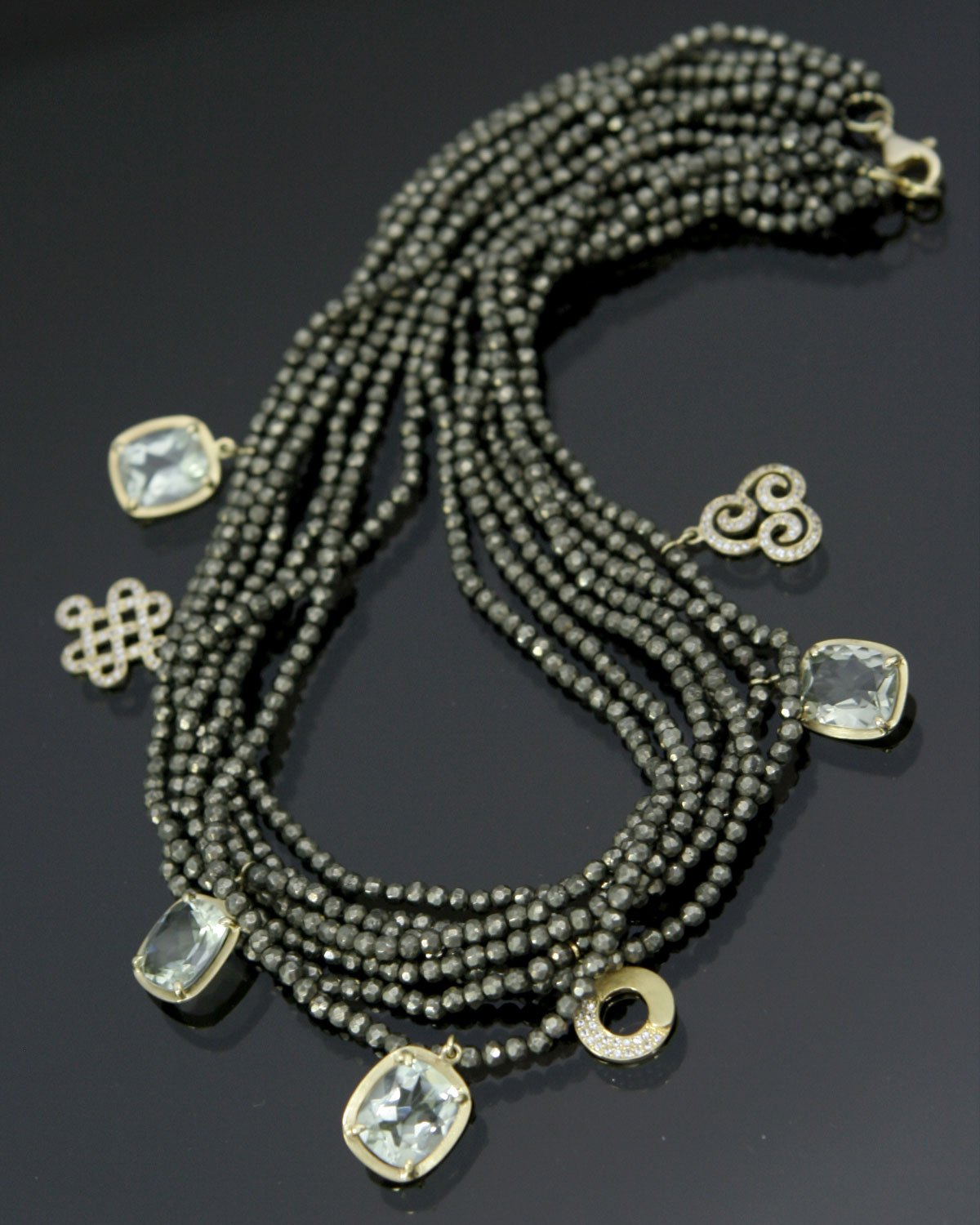
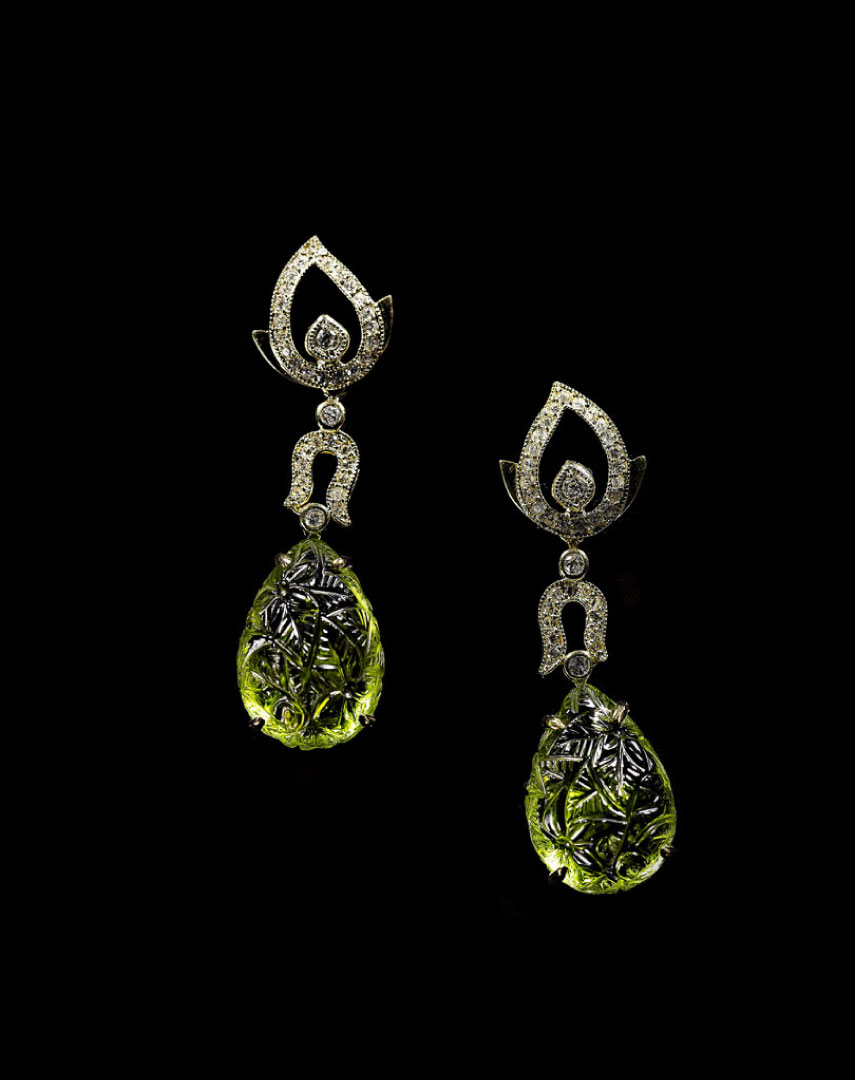
Butch called me up late in the evening a couple of months ago; excited over plans to propose to his girlfriend. Wanting to pay tribute to her roots in Surigao, he said he wanted the engagement ring to reflect traditional goldsmithing techniques of the region. Because of the abundance of gold in the area, skills were developed in handling the material to produce daggers, masks, ornaments, tooth caps and even sashes (we're talking kilos here), to name a few, made of solid gold during pre-historic times. A dizzying, impressive and important collection of excavated samples can be found at the Ayala Museum's Gold of Ancestors permanent exhibit.

Back to the ring, I didn't want to infuse too many production and design elements as it would look too busy. Also, I wanted the ring to still have that unmistakable handmade look and feel. And so what I primarily wanted to highlight was the granulation technique; those tiny gold beads soldered together to make stippled patterns on sheets of metal so prevalent in Surigao gold crafts. We also incorporated round brilliant cut diamonds to make it more modern. Set against a background of hand-textured gold.
The proposal itself was coordinated with Inquirer columnist Michael Tan. In which in this attached article shows that "segue" to THE question in the last few paragraphs. In a nutshell, Butch planned a trip around when this article was coming out (which was May 13, 2011, last week). He booked a weekend for two to Macau. Planned for a specific time of day to go up to this certain lighthouse, nonchalantly show her a newspaper column.... well, you can just read it for yourself. But as a spoiler...she did say yes.
Why Marry?
Michael Tan
Philippine Daily Inquirer
May 13, 2011
MARRIAGE HAS been on my mind for the past few days, but before I get anyone’s hopes too high let me clarify that this doesn’t mean that I am considering it.
There just was no escaping thinking about marriage because of that royal wedding last month. (Don’t you just love the way people talk about “William and Kate’s wedding,” making it sound like they were your next-door neighbors?)
But even before that royal wedding, one of my former students, an anthropology graduate student without a drop of blue blood, had a wedding-related request which kept percolating in my head. After days of mulling over the request, I thought the only way I could accommodate his request was to write about marriages or, more specifically, why people marry.
Social scientists, especially anthropologists, sociologists and historians, have studied marriages and marriage systems for more than a century now and the studies show surprising similarities across societies.
Alliances
What we do know from all these studies is that marrying for love is fairly recent, and still isn’t universal. For most of history, and in most societies, marriage was more of an economic and political institution. Marriages were arranged to allow for an exchange of economic resources, all too often with the bride as “currency.” Marriages were also often related to political alliances, again the bride used as a way to bring together families, communities, even nations, kingdoms and empires.
Marriage, feminists argue, is a patriarchal creation, a way for men to sequester their women, ensuring that the offspring would be theirs, and theirs alone.
Marriage was, and still is, a tool for defining who “we” are, and of excluding “them.” Rules on whom you could marry were meant to keep the lineage “pure.” You married your own kind, defined by ethnicity, religion, class or caste.
Marriage defined how property, wealth and power were to be shared and used. There was a time, for example, when women in the Philippines could not own property separately from their husbands, or take out a bank loan without their husband’s permission.
Marriage also defined how resources were to be transmitted from one generation to another, and here the cross-cultural variations are tremendous. There are societies where only legitimate children have any rights. Other societies limit inheritance to the sons, and still others only allow eldest sons to get anything.
Not surprisingly, marriage was usually limited to the rich. The poor had no reason to marry since there was no property to divide. The poor weren’t interested either in the debates around divorce, which was mainly a way to divide up property after a marriage had failed.
Marriage ceremonies were limited to the rich, the ceremonies converted into occasions to show off, to display wealth and political power. The pomp and pageantry of that recent royal wedding was in many ways almost nostalgic, a way of displaying Britain’s power, even if it has been much diminished.
Marriages remain largely secular events in many societies, a way to declare a commitment has been made, not just between the spouses but also their families and communities. The religious element came about to give legitimacy to the union, supposedly because the marriage vows are exchanged in front of God or the gods.
I wonder though about how strong that religious element is. In the Philippines, poorer couples simply go into a live-in arrangement. Later, with some money, they would go for a civil wedding, with a small and modest celebration. A few more years might elapse before a religious ceremony, with expectations that the wedding is followed by an elaborate and expensive wedding feast. The wait may take so long that when the time comes, the grandchildren serve as ring-bearers and flower girls.
Marrying for love
So when did people begin to marry for love?
It’s hard to say when exactly. Certainly people have been falling in love since time immemorial, but that did not necessarily lead to marriage because, as I have just described, marriage was often more of a practical institution. Marriages were arranged by families, rather than a couple falling in love.
Marriages for love came with the rise of liberalism, and the idea of individual rights. Urbanization, and young people being able to leave home and live independently, allowed for more of individual decisions.
And as love became more important, marriage vows shifted toward declarations of fidelity and commitment, for better or for worse and all that. Of course, skewed gender relations still shape these vows, Christian marriage ceremonies still having women pledging to obey their husbands. (I hear less and less of this, though, maybe because my women friends are quite independent.)
In the latter part of the last century, marriage rates began to tumble, especially in Western countries. There were those who felt true love didn’t need that piece of paper that came with marriage. Women complained that for all the vows that were taken, men continued to abdicate the many responsibilities involved. Still others weren’t willing to make a commitment for life, wanting more time before taking that plunge, if at all. There were also those who thought that marriage had become too much of a legal formality and that rights and responsibilities could be defined through other arrangements such as civil unions and partnerships.
The declining trend seems to be reversing now. One reason, curiously, comes from the campaigning of lesbians and gay men for the right to marry. Even as civil unions and partnerships were extended to include same-sex couples, the ultimate demand has been for marriage, which is believed to be essential for strengthening bonds of love and commitment. There is something bold and brave about declaring, in front of many people (the whole world, in the case of William and Kate), that two people are ready to stay together for life.
So, maybe marriage isn’t that old-fashioned, at least the kind with love involved. Which was why I seriously considered the request of my former student Rozanno Rufino to let the world (okay, okay, so maybe not the world but Inquirer readers, which comes pretty close) know that today he will ask his girlfriend, Karla Hotchkiss, to marry him. If plans went well, Butch (that’s Rozanno) would have proposed around noon today at the Guia Lighthouse in Macau. Who knows, maybe with Butch on his knees, flowers all around, and Josh Groban singing in the background.
I usually get thesis and dissertation proposals from my students, but this time Butch sent me a draft of his marriage proposal, where he talks about his belief in destiny, of people being made for each other. But there’s more, Butch declares, because the seat of love is human will. Marriage comes into the picture, as a willingness to commit.
It’s an interesting and still romantic angle, where saying yes does not mean “I do,” but “I will.”
click here to view original article