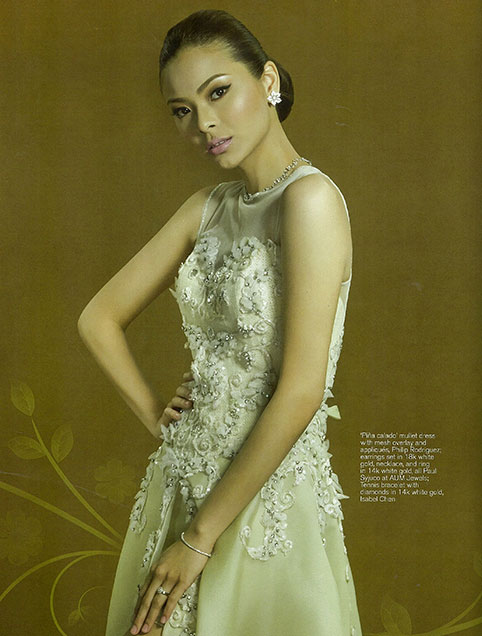
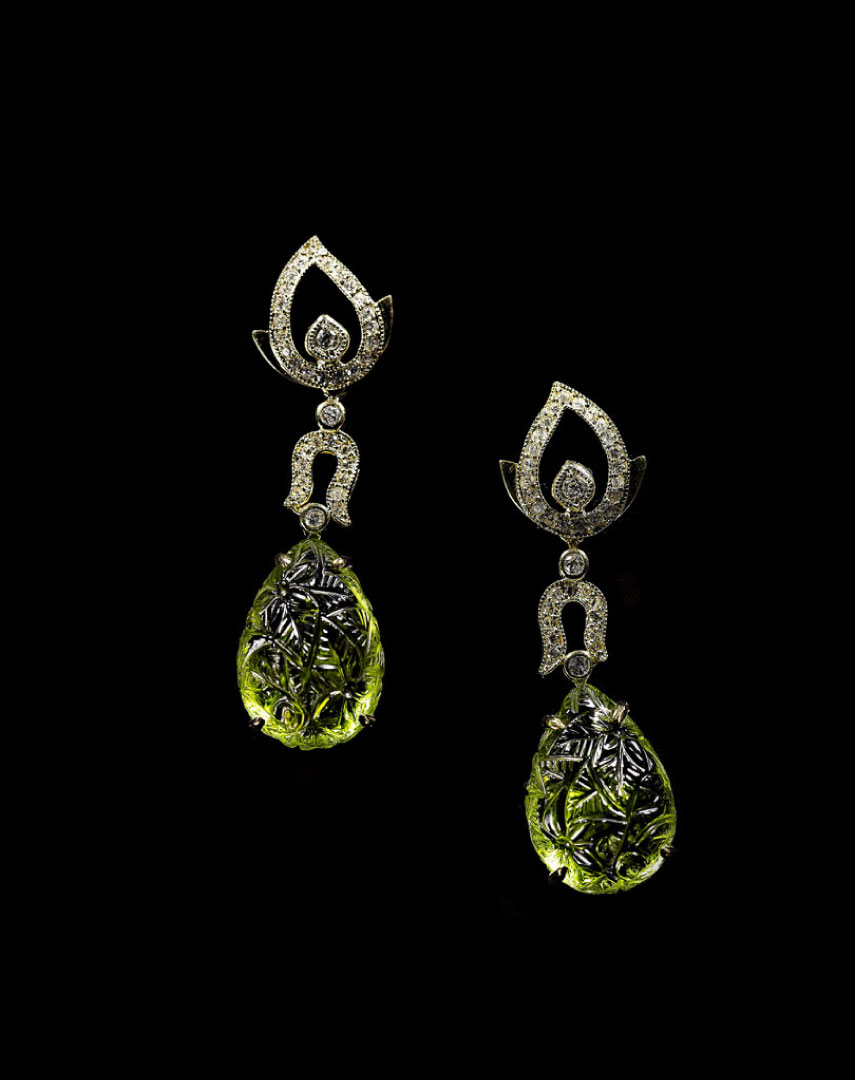
Deux Yeux Launches November 11

November 4th, 2011 by Paul

The history of grand jewels is nothing short of fascinating. Stories of fabulous wealth and costly inventories of exquisite gems seem so far fetched today, and somewhat of a social sin, that when one reads accounts of court jewels from the Mughal Dynasty, Siam royalty, as well as the French and English crown jewels, one wouldn’t know if they were actually fantasy or fairy tale. From the fabulous Golconda finds, wherein the first diamonds were mined, came the largest and most illustrious of gems; providing the Mughals their playthings of pebble sized diamonds strung in massive bibs, turban ornaments, bracelets and rings, among other things…and all worn together at the same time.

A sort of exchange of European and Indian/Oriental design happened in the early 1900’s when French joalliers were commissioned by the English royal house to take apart and recreate many of the accumulated gifts from India, considered the greatest jewels in Europe then. The French artisans redesigned them into lighter, more elegant, Indian-inspired feminine pieces as the originals were mainly worn and designed for male wearers.

Magnificent pieces were produced through commissions between the 1700’s and early 1900’s by Queen Alexandra, Napoleon and the infamous Marie Antoinette to name a few, but so far as history goes, the general fate of these said magnificent jewels were either to be taken apart or redesigned according to the successive monarchs’ tastes. A majority of the French Crown Jewels was, in fact, auctioned off in 1887 to prevent a royalist coup d’etat. Parures, coronets and diadems of natural pearls, precious gems and large diamonds were dismantled and sold into numerous lots. And once they were disposed, most were never to be heard from again.

It is in these cloudy chronicles that Kristine and Paul draw inspiration for their new creations from. Wherein literal translations of these jewels would be next to impossible, the designers now attempt to reinterpret these grand designs with their own takes. “I am inspired to create pieces that give a similar feel of elegance and history using a more playful approach,” says Kristine. “I’ve also been watching Disney fairy tale based movies and listening to the soundtracks while I design. I don’t know if this has a strong influence on the outcome, but it keeps the royal mood light and fun!”

“What inspires me are the classic forms and motifs; the incredibly large stones and the formal symmetry. Which I plan to inject some movement, tension and whimsy to, to lighten the whole look,” says Paul. “During the creation process, I noticed a large part of my collection gave nod to the Mughal era; with ‘decadence’ as the guiding principle in allusion to the feel of the end product. But I made sure everything would still be wearable.”

Deux Yeux, roughly meaning “two eyes”, aims to show two different views on the discussion of court jewels. The challenge of which is to practically imagine the original pieces; even the original cuts of the gems themselves, as references to these remain scarce. It was in a time of yet unspoiled commercial society that these jewels came to be and it is in that essence of pure creativity that fueled the designers’ minds.

The collections will once again be produced applying the principles of renewable luxury. Using reclaimed precious metals and forming them into these newly inspired pieces.

Deux Yeux’s launch will be on November 11, 2011 at Firma Greenbelt 3, Friday, at 6pm. Co-presented by Ayala Malls, Moet & Chandon and L’Oreal Paris Philippines.

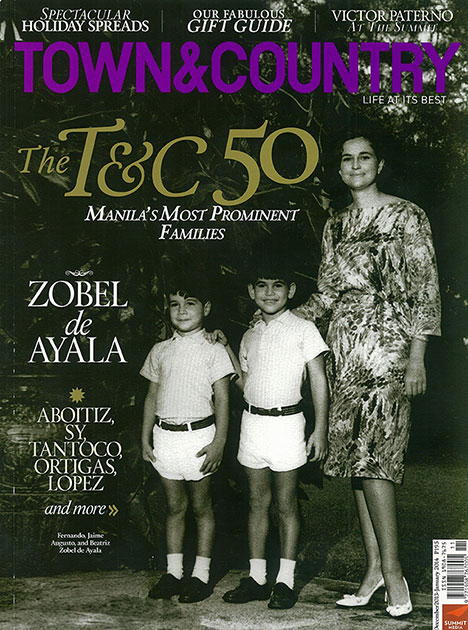
Town & Country, October 2011

October 10th, 2011 by Paul

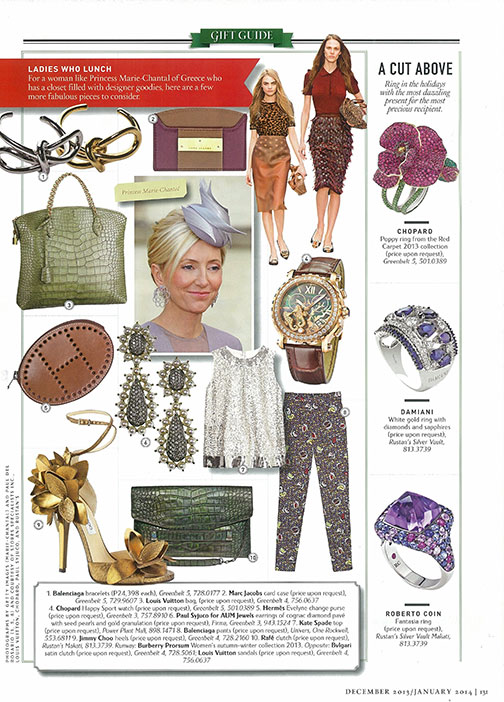
Glad to be in this month’s Town & Country’s list again.

The spinel earrings is at number 1.

You can click on the image to enlarge or click here to check the archive entry on spinels for a bigger view.

Thanks again to Rorie Manzano for “liking”!

Musing on Mughal

October 3rd, 2011 by Paul

Next month’s pretty exciting; big news then. But as a preview of new things to come, I’ve been sort of fixating on the Mughal dynasty lately. The look. The incredible stories. The history. And I’ve sort of taken inspiration from the jewels as well. Not to reproduce impossible pieces but to take off from them. As an example here are earrings, influenced by ancient patterns, updated and interpreted. With drop center stones about 0.75cts each set in white gold.

Tabletop

September 14th, 2011 by Paul

I like emerald cut diamonds. But they seem to have more character in larger sizes. They don’t sparkle as much as brilliant cut diamonds but possess a more subtle, ice-cube like character, for lack of a better term.  Inset is a bespoke project with components taken from several heirloom pieces and formed into one gorgeous bauble. At the center is about a 2 carat emerald cut diamond, flanked by diamonds of about a carat each. A parallel of pave diamonds go horizontally across and run down the sides of the architecturally inspired ring. When worn, all you see on top of the finger are broad flashes of white light.

Angel Skin Coral

August 4th, 2011 by Paul

Angel skin coral is characterized by its soft, even pink hue and is highly prized along with the deep red varieties. Corals were traditionally given to babies as protection against the “evil eye”. But these earrings will probably get the attention of eyes in general. It’s so delicate and feminine.

Spinels

July 4th, 2011 by Paul

Historically, red spinels have been incorrectly labeled as rubies. But it’s quite understandable how this happened as:

1.) Spinels are usually found in the same places where corundum is found; with ruby being the red variety of corundum. In fact spinels are often used as indicator stones by sapphire miners when looking for new sites as they occur together quite commonly.

2.) They have similar qualities in that corundum and spinels are hard minerals. And when faceted gives a similar sharp brilliance. There are blue spinels as well and some outstanding samples intersected with the colors of blue sapphires (also corundum).

3.) Basically anything red was labeled as rubies back in the day.

Today, however, gemology has allowed for clear separation/identification of these two gems. And I happen to love spinels because it comes in these moody shades. Yes, exceptionally rare ones are red or sapphire-like blue. But they also come in bright pinks, deep purples and deep greens. Transparent, clean, faceted spinels are really fine examples of colored gems and posses an almost diamond-like brilliance. Plus they’re never really treated to enhance their colors or clarity in any way.

Inset are earrings and a necklace of multi-colored faceted spinels with round brilliant diamonds set in white gold.

OK! Magazine Philippines, June 2011

June 21st, 2011 by Paul

In this month’s OK! Magazine. In tune with THE royal wedding featuring colored stone engagement rings; with the 3-stone spinel and emerald rings as my contribution to this jeweled spread. Many thanks to Jae De Veyra Pickrell!

UNICEF Auction for Action

May 23rd, 2011 by Paul


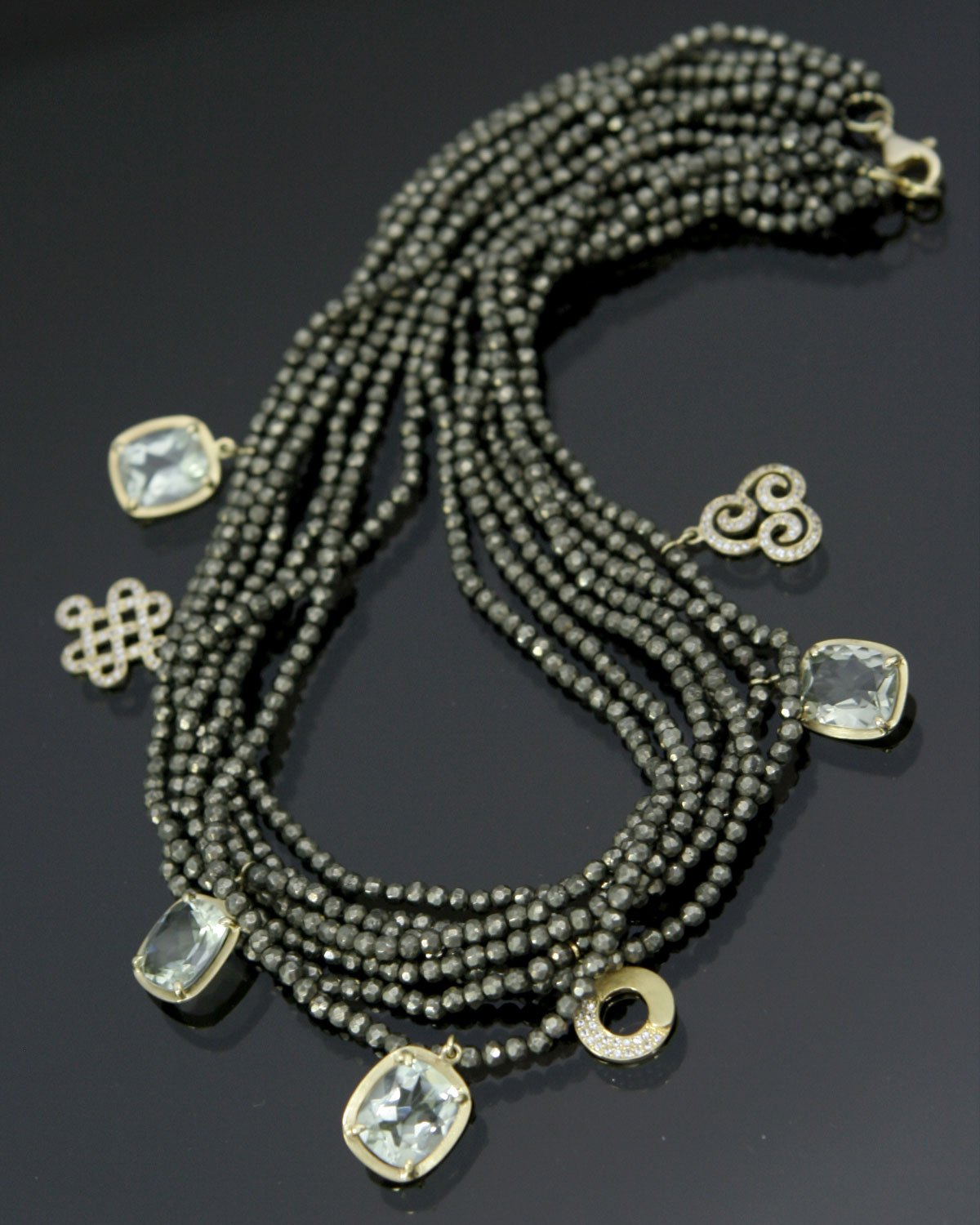
Many thanks to Daphne Osena-Paez for rounding up everyone for this cause. This necklace will go on auction along with other amazing works by Filipino designers starting May 25, 2011 via eBay.

Art and Design Come Together for Unicef Auction
By: Dexter R. Matilla
Philippine Daily Inquirer
Monday, May 23rd, 2011

MANILA, Philippines—Real-life stories of maternal deaths happen in the Philippines. Whether the cause may be due to lack of skilled midwives in rural areas or inaccessibility to hospitals, death during childbirth is a main concern for the United Nations Children’s Fund (Unicef) Philippines.

Through the initiative of Daphne Oseña-Paez, Unicef special advocate for children, artists and designers have put their resources together in the hope of raising money that would benefit programs on maternal health and education in the Philippines’ poorer areas.

“When you meet a husband who has lost his wife due to excessive bleeding and was not rushed to the nearest hospital, you start to think and realize that these things should not be happening in 2011,” Oseña-Paez says.

Joining her is celebrity host and also a Unicef special advocate for children Bianca Gonzalez, who has been working with Unicef since 2007.

“Our work with Unicef is that we go with them on site visits—at public schools and daycare centers—and spread the word as much as possible on what’s happening and how people can help,” Gonzalez says.

Gonzalez adds that Unicef would like people to know the funds for its projects do not necessarily come from the United Nations but from donations by individuals, corporations, volunteers.

Hard work and perseverance

Unicef country representative Vanessa Tobin says the project, Auction for Action, is a first for Unicef Philippines.

“Our partnership with acclaimed artists via online auction helps us engage the public in a new and interesting way,” Tobin says. “As well as raising important funds for our work, we will be able to raise awareness of important issues affecting children in the most disadvantaged communities of the Philippines and worldwide.”

“I’ve been working with Unicef since 2007 and I’m very excited to be a part of this unique fundraising auction,” Gonzalez says. “Whilst online auctions are quite new to the Philippines, it’s very secure, and the best thing is you can participate from anywhere in the country.”

But it was through the perseverance of Oseña-Paez that the auction will push through and go live online on May 25 via www.ebay.ph/unicef.

Oseña-Paez says she approached friends—via text, e-mail, Facebook and Twitter—who are artists and designers with the idea of donating items for the auction, with the funds benefiting Unicef’s various projects.

“My head spun that first week—it was like I had a list of favorite things from my favorite creative people,”Oseña-Paez says. “I couldn’t believe how easy it was to ask for help. The rest of the hard work is being done by the Unicef team. It has been many days and nights of coordination, planning and logistical problem-solving.”

Participating artists

Featured artists are Manny Baldemor, Michael Cacnio, Celestina, Seb Chua, Kenneth Cobonpue, Araceli LimcacoDans, Kristine Dee, Janina Dizon, Mich Dulce, Tom Epperson, Accessory Lab, Ito Kish, E. Billy Mondoñedo, Ramon Orlina, Debbie Palao, Ling Quisumbing Ramilo, Benji Reyes, Popo San Pascual, Joey Samson, Vito Selma, Victor Sollorano, Paul Syjuco, Ricky Toledo and Chito Vijandre of Firma/Felicity, Reg Yuson, and Oseña-Paez herself.

Galerie Joaquin artists such Jovan Benito, Jomar Delluba, Hamzah Marbella, Dominic Rubio and Juvenal Sansó are also participating.

Up for grabs in the auction are experiential packages, including dinner by chef Tonyboy Escalante of Antonio’s, and dugout experience with the Philippine Football Team, or Azkals, on July 3 at the World Cup qualifier in Manila.

“Daphne’s love for art and Unicef’s cause made this happen,” Gonzalez says. Oseña-Paez says none of them had any experience of putting together an auction before, and thanks partner eBay Philippines for making it possible.

“This is like a dream for me—curating and organizing a show like this,” Oseña-Paez says.

And the same can probably be said for the beneficiaries of the auction.

An Elaborately Planned Proposal

May 18th, 2011 by Paul

Butch called me up late in the evening a couple of months ago; excited over plans to propose to his girlfriend. Wanting to pay tribute to her roots in Surigao, he said he wanted the engagement ring to reflect traditional goldsmithing techniques of the region. Because of the abundance of gold in the area, skills were developed in handling the material to produce daggers, masks, ornaments, tooth caps and even sashes (we’re talking kilos here), to name a few, made of solid gold during pre-historic times. A dizzying, impressive and important collection of excavated samples can be found at the Ayala Museum’s Gold of Ancestors permanent exhibit.

Back to the ring, I didn’t want to infuse too many production and design elements as it would look too busy. Also, I wanted the ring to still have that unmistakable handmade look and feel. And so what I primarily wanted to highlight was the granulation technique; those tiny gold beads soldered together to make stippled patterns on sheets of metal so prevalent in Surigao gold crafts. We also incorporated  round brilliant cut diamonds to make it more modern. Set against a background of hand-textured gold.

The proposal itself was coordinated with Inquirer columnist Michael Tan. In which in this attached article shows that “segue” to THE question in the last few paragraphs. In a nutshell, Butch planned a trip around when this article was coming out  (which was May 13, 2011, last week). He booked a weekend for two to Macau. Planned for a specific time of day to go up to this certain lighthouse, nonchalantly show her a newspaper column…. well, you can just read it for yourself.  But as a spoiler…she did say yes.

Why Marry?
Michael Tan

Philippine Daily Inquirer
May 13, 2011

MARRIAGE HAS been on my mind for the past few days, but before I get anyone’s hopes too high let me clarify that this doesn’t mean that I am considering it.

There just was no escaping thinking about marriage because of that royal wedding last month. (Don’t you just love the way people talk about “William and Kate’s wedding,” making it sound like they were your next-door neighbors?)

But even before that royal wedding, one of my former students, an anthropology graduate student without a drop of blue blood, had a wedding-related request which kept percolating in my head. After days of mulling over the request, I thought the only way I could accommodate his request was to write about marriages or, more specifically, why people marry.

Social scientists, especially anthropologists, sociologists and historians, have studied marriages and marriage systems for more than a century now and the studies show surprising similarities across societies.

Alliances

What we do know from all these studies is that marrying for love is fairly recent, and still isn’t universal. For most of history, and in most societies, marriage was more of an economic and political institution. Marriages were arranged to allow for an exchange of economic resources, all too often with the bride as “currency.” Marriages were also often related to political alliances, again the bride used as a way to bring together families, communities, even nations, kingdoms and empires.

Marriage, feminists argue, is a patriarchal creation, a way for men to sequester their women, ensuring that the offspring would be theirs, and theirs alone.

Marriage was, and still is, a tool for defining who “we” are, and of excluding “them.” Rules on whom you could marry were meant to keep the lineage “pure.” You married your own kind, defined by ethnicity, religion, class or caste.

Marriage defined how property, wealth and power were to be shared and used. There was a time, for example, when women in the Philippines could not own property separately from their husbands, or take out a bank loan without their husband’s permission.

Marriage also defined how resources were to be transmitted from one generation to another, and here the cross-cultural variations are tremendous. There are societies where only legitimate children have any rights. Other societies limit inheritance to the sons, and still others only allow eldest sons to get anything.

Not surprisingly, marriage was usually limited to the rich. The poor had no reason to marry since there was no property to divide. The poor weren’t interested either in the debates around divorce, which was mainly a way to divide up property after a marriage had failed.

Marriage ceremonies were limited to the rich, the ceremonies converted into occasions to show off, to display wealth and political power. The pomp and pageantry of that recent royal wedding was in many ways almost nostalgic, a way of displaying Britain’s power, even if it has been much diminished.

Marriages remain largely secular events in many societies, a way to declare a commitment has been made, not just between the spouses but also their families and communities. The religious element came about to give legitimacy to the union, supposedly because the marriage vows are exchanged in front of God or the gods.

I wonder though about how strong that religious element is. In the Philippines, poorer couples simply go into a live-in arrangement. Later, with some money, they would go for a civil wedding, with a small and modest celebration. A few more years might elapse before a religious ceremony, with expectations that the wedding is followed by an elaborate and expensive wedding feast. The wait may take so long that when the time comes, the grandchildren serve as ring-bearers and flower girls.

Marrying for love

So when did people begin to marry for love?

It’s hard to say when exactly. Certainly people have been falling in love since time immemorial, but that did not necessarily lead to marriage because, as I have just described, marriage was often more of a practical institution. Marriages were arranged by families, rather than a couple falling in love.

Marriages for love came with the rise of liberalism, and the idea of individual rights. Urbanization, and young people being able to leave home and live independently, allowed for more of individual decisions.

And as love became more important, marriage vows shifted toward declarations of fidelity and commitment, for better or for worse and all that. Of course, skewed gender relations still shape these vows, Christian marriage ceremonies still having women pledging to obey their husbands. (I hear less and less of this, though, maybe because my women friends are quite independent.)

In the latter part of the last century, marriage rates began to tumble, especially in Western countries. There were those who felt true love didn’t need that piece of paper that came with marriage. Women complained that for all the vows that were taken, men continued to abdicate the many responsibilities involved. Still others weren’t willing to make a commitment for life, wanting more time before taking that plunge, if at all. There were also those who thought that marriage had become too much of a legal formality and that rights and responsibilities could be defined through other arrangements such as civil unions and partnerships.

The declining trend seems to be reversing now. One reason, curiously, comes from the campaigning of lesbians and gay men for the right to marry. Even as civil unions and partnerships were extended to include same-sex couples, the ultimate demand has been for marriage, which is believed to be essential for strengthening bonds of love and commitment. There is something bold and brave about declaring, in front of many people (the whole world, in the case of William and Kate), that two people are ready to stay together for life.

So, maybe marriage isn’t that old-fashioned, at least the kind with love involved. Which was why I seriously considered the request of my former student Rozanno Rufino to let the world (okay, okay, so maybe not the world but Inquirer readers, which comes pretty close) know that today he will ask his girlfriend, Karla Hotchkiss, to marry him. If plans went well, Butch (that’s Rozanno) would have proposed around noon today at the Guia Lighthouse in Macau. Who knows, maybe with Butch on his knees, flowers all around, and Josh Groban singing in the background.

I usually get thesis and dissertation proposals from my students, but this time Butch sent me a draft of his marriage proposal, where he talks about his belief in destiny, of people being made for each other. But there’s more, Butch declares, because the seat of love is human will. Marriage comes into the picture, as a willingness to commit.

It’s an interesting and still romantic angle, where saying yes does not mean “I do,” but “I will.”


click here to view original article

Hot Orange

May 2nd, 2011 by Paul

We came up with this ring from a client’s selection of personal diamonds and an oval citrine she treasured as it was a gift from her late husband. It was a little bit scratched on the top from daily use. But the redesign, resulting in the ring above really gave it new life. Big, masculine and with clean lines. Just as she wanted.

AUM JEWELS
Lobby Level, TriNoma Mall
EDSA corner North Avenue
1110 Quezon City, Philippines

+63(2) 943.1524
+63(917) 840.4788
aum[at]paulsyjuco.com

To meet with Paul Syjuco, please call to make an appointment.