




Historically, red spinels have been incorrectly labeled as rubies. But it's quite understandable how this happened as:
1.) Spinels are usually found in the same places where corundum is found; with ruby being the red variety of corundum. In fact spinels are often used as indicator stones by sapphire miners when looking for new sites as they occur together quite commonly.
2.) They have similar qualities in that corundum and spinels are hard minerals. And when faceted gives a similar sharp brilliance. There are blue spinels as well and some outstanding samples intersected with the colors of blue sapphires (also corundum).
3.) Basically anything red was labeled as rubies back in the day.

Today, however, gemology has allowed for clear separation/identification of these two gems. And I happen to love spinels because it comes in these moody shades. Yes, exceptionally rare ones are red or sapphire-like blue. But they also come in bright pinks, deep purples and deep greens. Transparent, clean, faceted spinels are really fine examples of colored gems and posses an almost diamond-like brilliance. Plus they're never really treated to enhance their colors or clarity in any way.
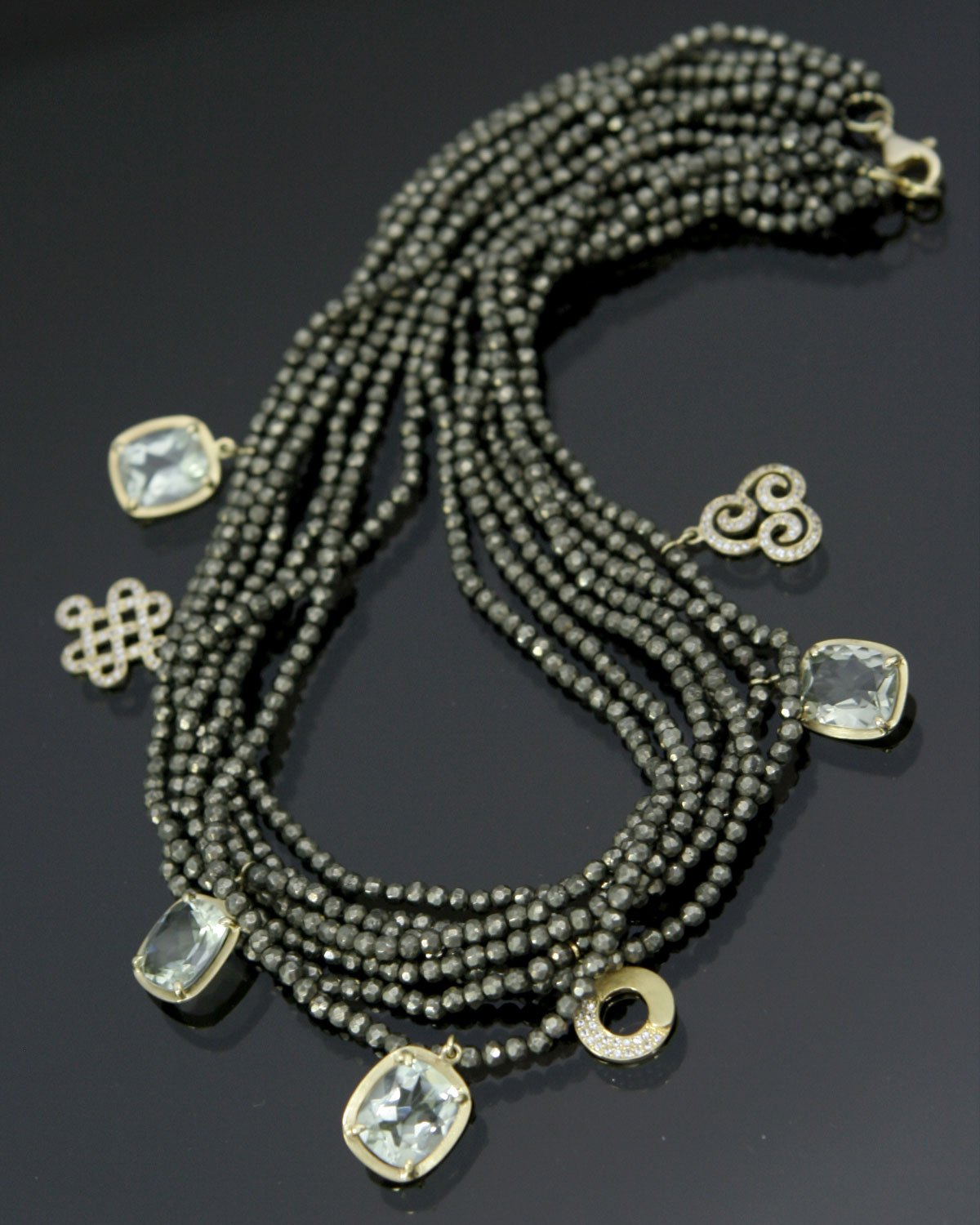
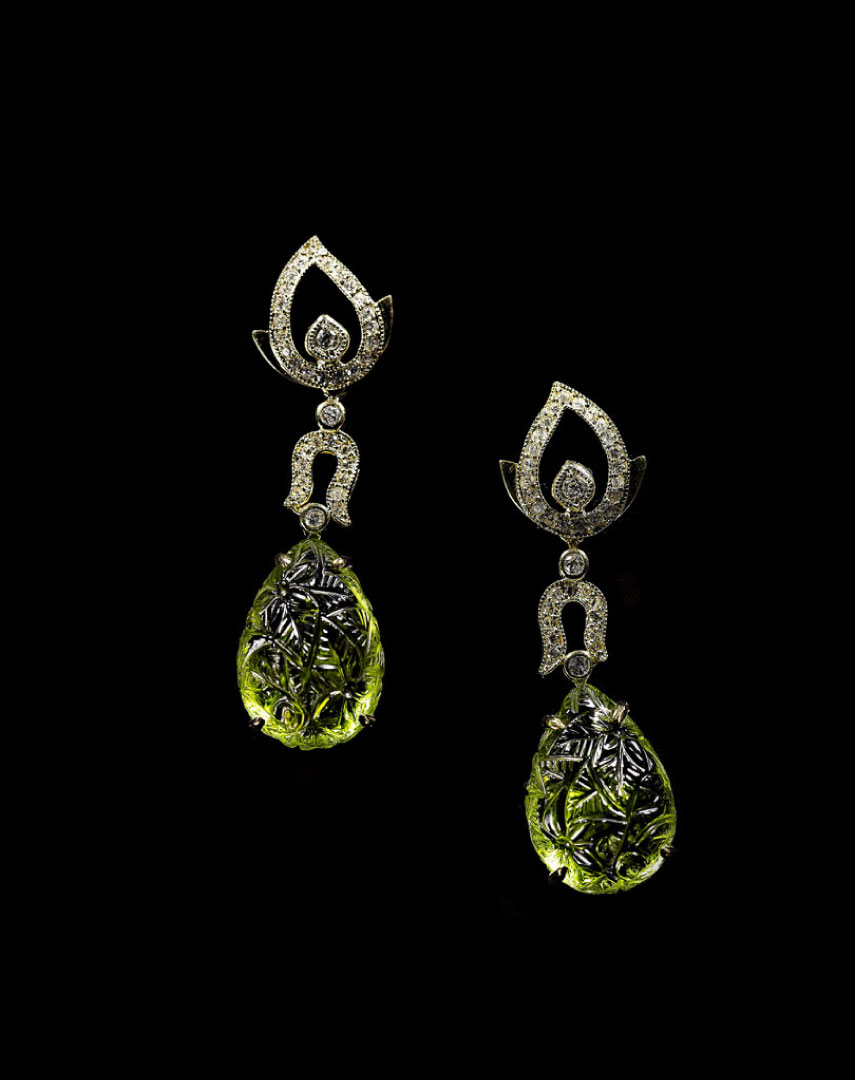
Inset are earrings and a necklace of multi-colored faceted spinels with round brilliant diamonds set in white gold.
may
July 7, 2011 at 11:06 am
I especially like your blog for informative articles such as this. And your pieces are just beautiful! Just curious, how can we distinguish between gemstones such as a red spinel and a ruby? Sometimes also there are colored stones some stores refer to as birthstones (are these man-made)? Thanks!
Paul
July 7, 2011 at 11:56 am
Thank you , May!
Fine rubies and red spinels are quite difficult to tell apart visually but trained gemologists can perform simple gem identification tests to find out which is which. But generally, spinels come in a slightly different color spectrum vs sapphires. And they’re generally cleaner.
In the local context the term “birthstone” has been given such a misnomer status in that it almost automatically implies that a certain stone is synthetic (or man-made) or a simulant. In essence, the terms “precious” and “semi-precious” are also obsolete as they imply some stones being more valuable than others. But we’re finding out more and more that some of these stones labeled as “semi-precious” are more rare and can be more costlier than some “precious” stones (i.e. paraiba tourmalines, red spinels).
“Gemstones” or “colored stones” would be the more appropriate general term. Whereas “birthstones” are more a traditional belief in that certain gemstones’ properties or powers are heightened within specific months. Because of the popularity of wearing one’s birthstone, people have produced either synthetics (man made) or simulants over the years to provide for inexpensive options. Hence the negative correlation of the term.
may
July 7, 2011 at 3:56 pm
This is why I always check on your blog! 🙂 Thank you so much for your reply. I am loving colored stones of late, and your designs are gorgeous.